Last updated: July 20, 2026 · Data reviewed quarterly
A denied claim is not the final word — it is the start of a process most people never use. Insurers of Affordable Care Act marketplace plans denied about 19% of in-network claims in 2024, yet fewer than 1% of denied claims are ever appealed, according to KFF. That silence is expensive, because appeals work more often than people expect: roughly one in three internal appeals and close to half of external reviews overturn the original denial. This guide shows the appeal path that actually moves a decision, the deadlines that protect you, and where to get free help.
The odds and the clock, in one table
Two things decide most appeals: whether you file in time, and whether you escalate past the first “no.” The numbers below come from KFF’s review of 2024 marketplace data and the federal appeal rules on HealthCare.gov.
| Stage | Your deadline | Insurer’s clock | How often it works |
|---|---|---|---|
| Internal appeal | 180 days from the denial notice | 30 days (service not yet received) or 60 days (already received) | About 34% overturned |
| Urgent internal appeal | Right away; can run beside an external review | 72 hours | Used for time-sensitive care |
| External review | Up to 4 months after the final internal denial | 45 days (standard) | Close to 50% overturned; decision is binding |
Why claims get denied — and why that helps you
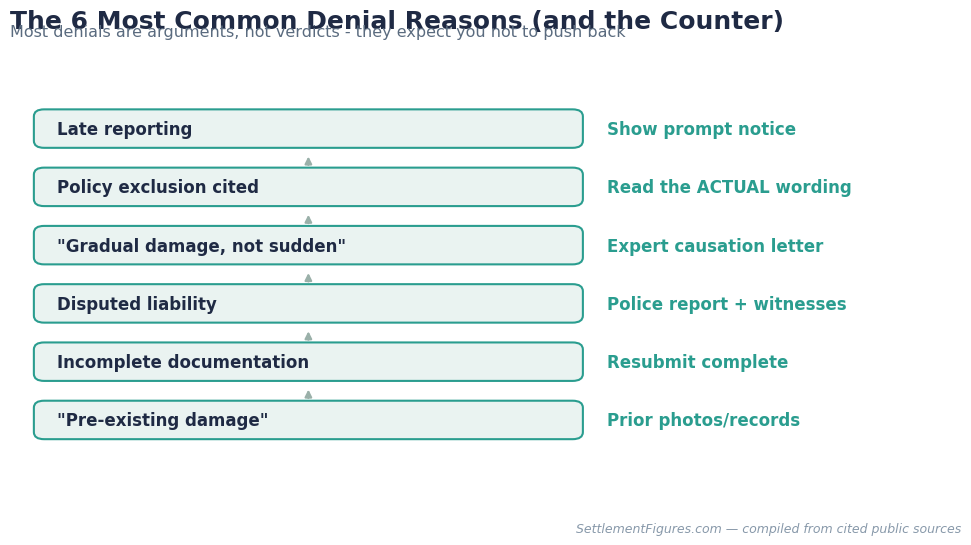
Most denials are not about the merits of your care. In 2024, insurers filed 36% of marketplace denials under “other,” 25% for administrative reasons, and 9% for a missing prior authorization or referral, per KFF. Only about 5% cited a lack of medical necessity. In plain terms, a large share of denials come down to paperwork and coding — the kind of problem a clear, documented appeal is built to fix.
Your denial letter and Explanation of Benefits are the roadmap. They must state the specific reason for the denial, and that reason tells you exactly what evidence to send back — a corrected code, a letter of medical necessity from your doctor, or the policy language that covers the loss.
The appeal path that actually works
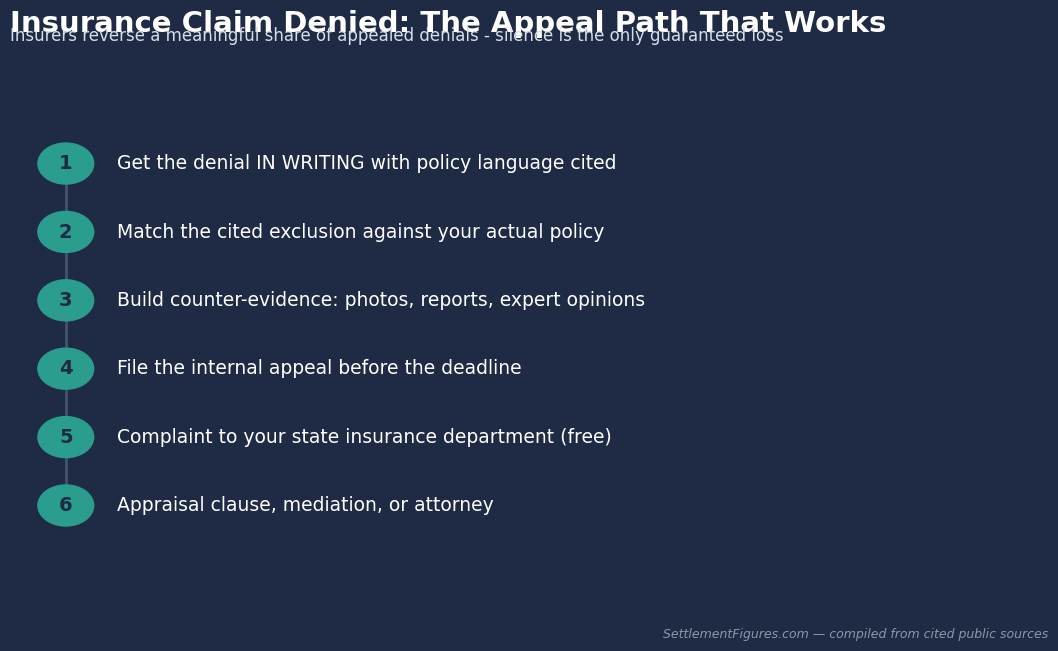
- Read the denial and pull your records. Note the exact reason and the appeal deadline printed on the letter. Gather the policy, the EOB, bills, and any notes from your provider.
- File the internal appeal in writing. Include your name, claim number, and member ID, and answer the stated reason directly. You have 180 days from the denial; do not wait, because a strong file beats a fast one only if it arrives on time.
- Request an external review if the internal appeal fails. An independent reviewer with no tie to your insurer looks at the whole record, and for most health plans the decision is binding. You generally have up to 4 months after the final internal denial to ask.
- Escalate property and auto denials through your state. These do not use the federal health process. File a free complaint with your state Department of Insurance, and treat a documented, unreasonable denial the same way you would a lowball total-loss offer — as evidence.
What a strong appeal letter includes
A winning appeal is short, specific, and hard to ignore. Open with your name, claim number, and member or policy ID, and name the exact denial reason you are answering. Then attach the proof that rebuts it: the corrected billing code, a letter of medical necessity, photos and estimates, or the policy section that covers the loss. Quote that policy language directly — it forces the reviewer to address it.
Keep a dated log of every call and letter, and send appeals so you can prove delivery. That paper trail does double duty: it strengthens the appeal now, and it is the same evidence that supports a diminished-value claim or a bad-faith complaint later if the insurer keeps stalling. State the specific outcome you want, and give a reasonable deadline to respond.
When a denial crosses into bad faith
An insurer is allowed to deny a claim it has a reasonable basis to dispute. It is not allowed to deny one it knows it should pay, ignore your evidence, or refuse to explain itself. When that pattern shows up — especially after you have appealed with proof — the denial can become insurance bad faith, which carries remedies beyond the original claim amount. The same escalation applies when your own insurer stalls a first-party claim, such as an uninsured-motorist claim after a hit-and-run.
Where to get free help
Free official help & resources
- HealthCare.gov — Appeal an insurance company decision: the federal guide to internal appeals and external review, at healthcare.gov/appeal-insurance-company-decision. Marketplace Call Center: 1-800-318-2596 (TTY 1-855-889-4325).
- Your state Department of Insurance — files and investigates denial complaints for free. Find yours via the NAIC directory. Consumer hotlines include California 800-927-4357, Texas 800-252-3439, and New York 800-342-3736.
- NAIC — How to File a Complaint: content.naic.org/consumer/how-to-file-complaint.
- Legal Services Corporation — free local legal aid if you qualify: lsc.gov.
Frequently asked questions
Why was my insurance claim denied?
Most denials are administrative, not medical. In 2024, 36% of marketplace denials were coded “other,” 25% administrative, and 9% for a missing prior authorization, according to KFF — only about 5% were for lack of medical necessity. Your denial letter must state the specific reason, which points you to the evidence you need.
How long do I have to appeal a denied claim?
For most health plans you have 180 days from the denial notice to file an internal appeal, and up to 4 months after a final internal denial to request an external review, per HealthCare.gov. Property and auto claims follow your state’s rules, so check the denial letter and your policy.
What are my chances of winning an appeal?
Better than most people assume. KFF’s 2024 data show about 34% of internal appeals and close to half of external reviews overturned the denial. Because fewer than 1% of denied claims are appealed at all, simply filing puts you ahead of the vast majority of policyholders.
What is an external review?
It is a second look by an independent reviewer with no connection to your insurer. They examine the claim, the denial, and your evidence, and for most health plans their decision is binding — the insurer must comply. You can request it after your internal appeal is denied, and sooner in urgent situations.
What should I do if my appeal is denied?
Move to the next rung: request an external review for a health claim, or file a free complaint with your state Department of Insurance for a property or auto claim. If the insurer had no reasonable basis to deny a covered claim, ask a coverage attorney whether the conduct rises to bad faith.
☕ This research is reader-supported. No law firm pays us. If this guide saved you time or money, you can buy the research team a coffee — it keeps the data free and updated.
This article is for informational purposes only and is not legal advice. Coverage and appeal rights vary by policy and by state. Consult a licensed attorney or your state Department of Insurance before making decisions about your claim.
