
Last updated: July 7, 2026 · Data reviewed quarterly
Same injury, two very different systems. Workers’ comp pays quickly without proving fault — but never pays pain and suffering. A personal injury lawsuit pays everything — but only if someone was negligent, and it takes years. Knowing which lane (or both) applies can be worth six figures.
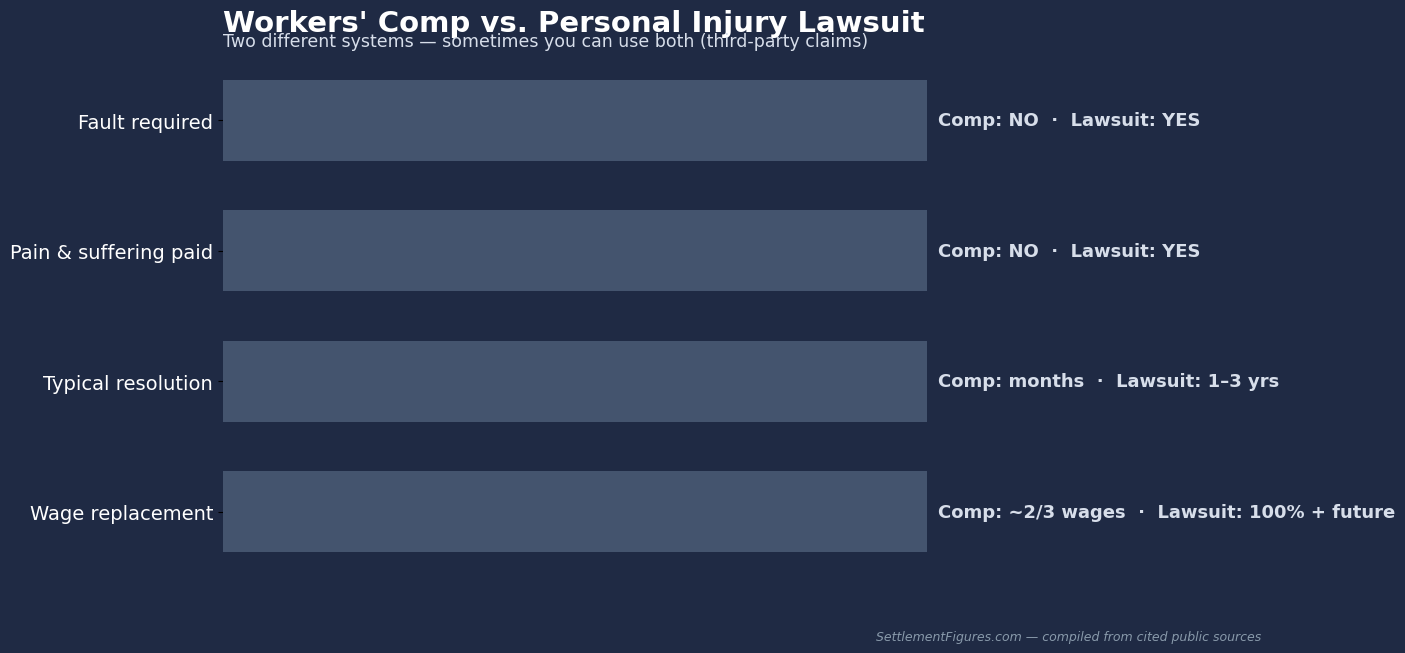
The core differences
| Factor | Workers’ comp | Personal injury lawsuit |
|---|---|---|
| Fault required | No — no-fault system | Yes — must prove negligence |
| Pain & suffering | Never paid | Paid, often the largest component |
| Wage replacement | ≈2/3 of wages, capped | 100% of lost earnings + future |
| Medical care | Covered via comp network | Damages include all care |
| Speed | Benefits in weeks; settle ≈16 months | 1–3 years typical |
| Who you claim against | Employer’s comp insurer | The negligent party (a third party, not your employer in most cases) |
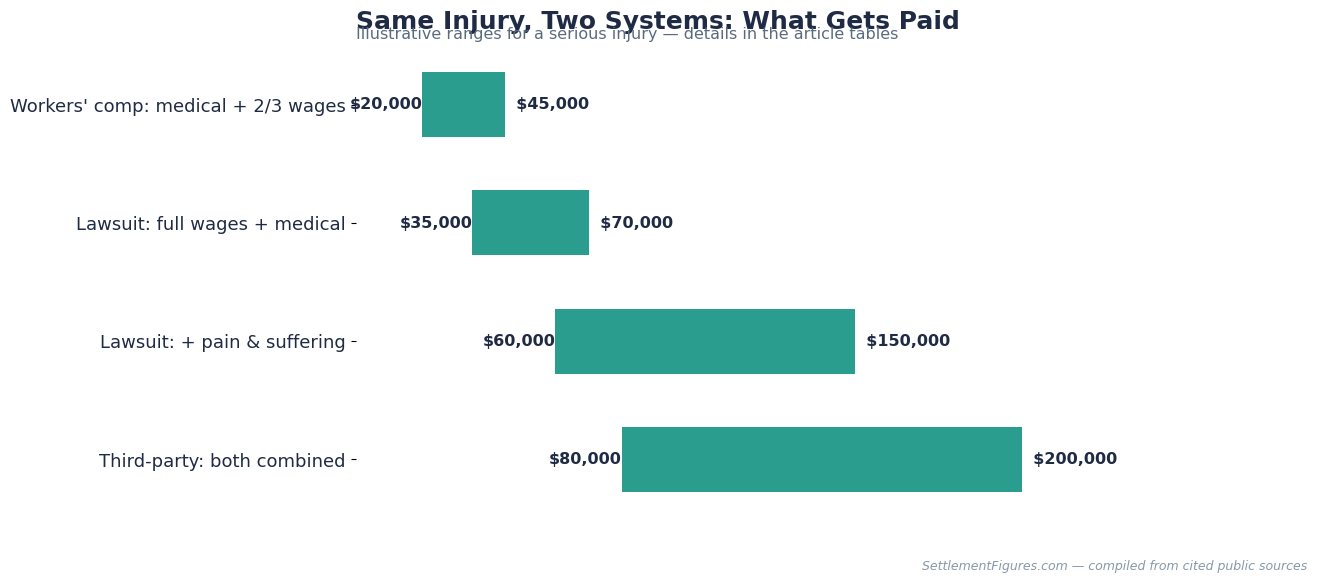
The key: third-party claims
You generally cannot sue your employer — comp is the exclusive remedy. But if someone OUTSIDE your employer caused the injury, you can run BOTH: a delivery driver hit by a negligent motorist (sue the driver), a warehouse worker hurt by a defective forklift (sue the manufacturer), a contractor injured by another company’s crew on site (sue that company). The comp insurer typically gets paid back part of its outlay from the lawsuit (a lien), and you keep the difference — which often includes the pain-and-suffering money comp never pays. Our car accident data and multiplier guide show what that adds.
Exceptions where you CAN sue your employer
Narrow but real: intentional harm, no comp insurance where required (many states then allow direct suits plus state-fund benefits), and some gross-negligence carve-outs. State-specific — verify with your board or counsel.
Free official help & resources
- Find your state comp board: dol.gov/agencies/owcp
- Employer uninsured? Report it to your state board — most states run an uninsured employers fund
- Free case evaluation channels: LSC.gov · ABA Find Legal Help
- Settlement taxes in each lane: IRS Pub 4345 (PDF)
FAQ
Can I really collect from both?
Yes, in third-party scenarios — comp pays now, the lawsuit adds the rest later, minus the comp lien. It is the most commonly missed money in workplace injuries.
Which pays more?
For the same serious injury, lawsuits usually total more (full wages + pain and suffering) but take years and require fault. Comp is the reliable floor; the lawsuit is the upside.
A coworker caused my injury. Third party?
Usually no — coworkers acting within their job fall under comp exclusivity. Off-duty or intentional acts can differ.
☕ This research is reader-supported. No law firm pays us. If this guide saved you time or money, you can buy the research team a coffee — it keeps the data free and updated.
This article is for informational purposes only and is not legal advice. Settlement values vary significantly by case and by state. Consult a licensed attorney in your state before making decisions about your claim.