
Last updated: July 7, 2026 · Data reviewed quarterly
What you do in the first hours after a crash decides more of your settlement than anything a lawyer does later. These ten steps protect your health first and your claim second — in that order.
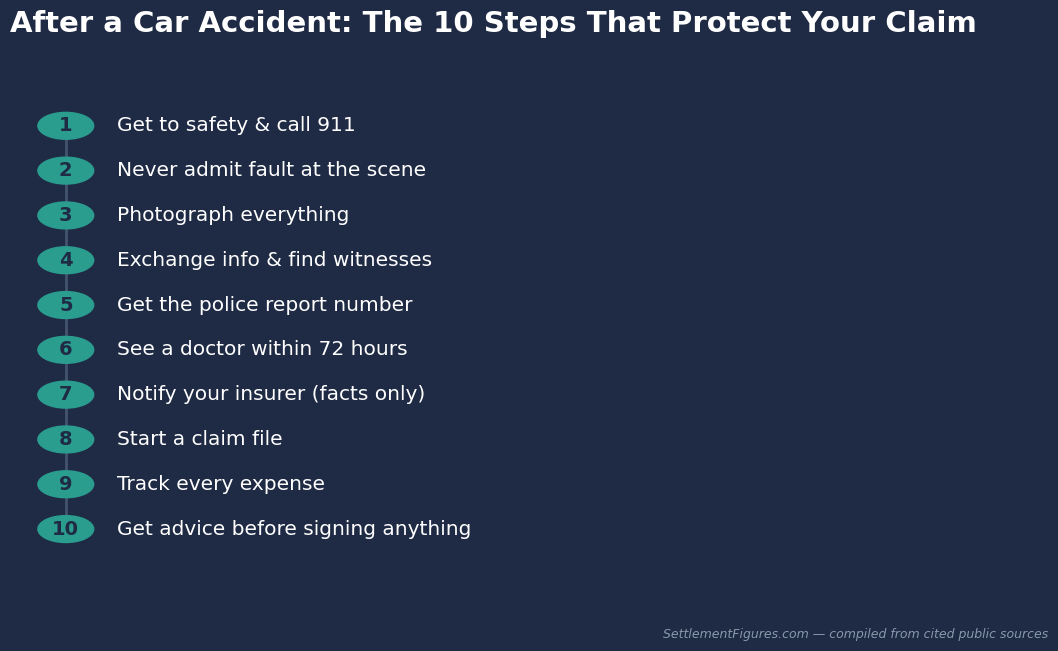
The 10 steps, explained
1. Get to safety and call 911
Move out of traffic if you can, then call 911 even for a “minor” crash. A police response creates the official record everything else builds on. If anyone feels dizzy, confused, or is bleeding, say so on the call.
2. Never admit fault at the scene
Adrenaline makes people apologize. “I’m sorry” becomes evidence. Stick to facts with the other driver and the officer; fault is determined later from physical evidence, statements and state law — not roadside apologies.
3. Photograph everything
All four corners of both vehicles, license plates, the road (skid marks, debris, signals), visible injuries, and the other driver’s insurance card and license. Wide shots first, then close-ups. Sixty seconds of photos outweigh sixty days of arguing.
4. Exchange information and find witnesses
Name, phone, insurer, policy number, plate. Ask bystanders for a phone number — a neutral witness is the single best answer to a fault dispute.
5. Get the police report number
Ask the officer how to obtain the report (usually your local police department’s records office or your state’s DMV portal, typically $5-$15). Insurers treat the report as the backbone of the file.
6. See a doctor within 72 hours
Two reasons: injuries like whiplash and internal bruising surface late, and a treatment gap is the #1 argument adjusters use to cut offers. Urgent care or your physician both work; describe every symptom, even “minor” ones.
7. Notify your insurer — facts only
Most policies require prompt notice. Give the when/where/who. You are NOT required to give a recorded statement to the other driver’s insurer, and you can politely decline until you know your damages.
8. Start a claim file
One folder (paper or phone): photos, report number, medical records, receipts, mileage to appointments, missed-work note from your employer. Our settlement data shows documented claims land meaningfully higher.
9. Track every expense
Copays, prescriptions, rentals, childcare you had to pay for — economic damages are the base your entire settlement multiplies from (see how the multiplier works).
10. Get advice before signing anything
Releases are final. Quick offers arriving before you finish treatment are priced to close the file cheap. For real injuries, a consultation (usually free) beats guessing — here is when you can safely go without a lawyer.
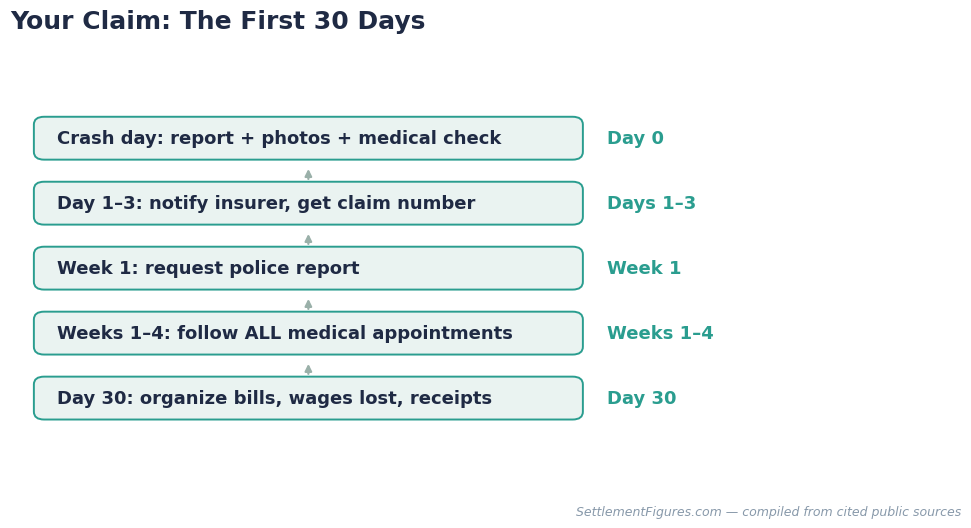
The first 30 days at a glance
Day 0: report, photos, medical check. Days 1-3: notify your insurer and get a claim number. Week 1: request the police report. Weeks 1-4: attend every appointment. Day 30: organize bills and lost-wage proof. From there, the process follows the stages in our settlement timeline guide.
Free official help & resources
- Emergency / police report: 911; request copies from your local police records office or state DMV
- Vehicle safety & recalls: NHTSA.gov — crash safety data and complaint line 1-888-327-4236
- Problems with an insurer: find your state insurance department via NAIC consumer resources to file a complaint
- Free or low-cost legal help: LSC.gov legal aid finder and the ABA’s Find Legal Help
- Local assistance of any kind: dial 211 or visit 211.org
FAQ
Should I call the police for a minor fender-bender?
Yes, if there is any damage or symptom. Some states require a report above a damage threshold (often $500-$2,500), and without one, fault becomes your word against theirs.
What if the other driver asks to “keep insurance out of it”?
Decline politely. Handshake deals collapse the moment their bumper hides $4,000 of sensor damage — and late reporting can jeopardize your own coverage.
Do I have to talk to the other driver’s insurance company?
No. You may direct them to your insurer or your attorney. If you do talk, give facts only and decline recorded statements.
☕ This research is reader-supported. No law firm pays us. If this guide saved you time or money, you can buy the research team a coffee — it keeps the data free and updated.
This article is for informational purposes only and is not legal advice. Settlement values vary significantly by case and by state. Consult a licensed attorney in your state before making decisions about your claim.